Choosing toys that are safe around pets
Most parents think about toy safety in terms of the child. In a house with a dog or a cat, there is a second audience for every toy: the animal that finds it on the carpet at eleven at night. Pets do not read age ratings and they investigate with their mouths. This guide covers what actually makes a toy risky in a pet household and how to sort what you already own.
Quick answer
Pet safe toys, in a family context, are children's toys that will not injure an animal and that an animal cannot injure itself with. In practice that means no small detachable parts, no loose string or cord, no accessible batteries or magnets, and nothing that shatters into sharp pieces. The safest toys are large, single-piece, and boring to chew.
Key takeaways
- The risk is usually the toy left on the floor, not the toy in use.
- Small detachable parts, string, batteries and magnets cause most problems.
- If a piece fits inside a cardboard tube, a dog can swallow it.
- Large single-piece toys are the safest default in a mixed household.
- Air blasters and similar toys should never be aimed at an animal.
What people actually mean by pet safe toys
A pet safe toy is not a toy designed for an animal. In most households the phrase means something narrower: a toy your children play with that will not injure the dog or cat, and that the dog or cat cannot injure itself with. The distinction matters because the risk usually has nothing to do with how the toy is used. It has to do with what happens when the toy is left on the rug at the end of the evening and the house goes quiet.
Animals investigate with their mouths. A dog that has never shown interest in a toy box will happily test a rubber wheel that has rolled under the sofa. Cats are less likely to swallow bulk plastic but far more likely to eat string. Any assessment of a toy should assume the animal will eventually get a few unsupervised minutes with it.
The four things that cause most problems
Toy hazards in a pet household cluster tightly. If you check for these four categories, you have covered the majority of what goes wrong.
- Small detachable parts: wheels, eyes, caps, plug-in accessories, projectile darts and pellets.
- String, cord, ribbon and elastic: sewing thread, kite line, yo-yo string, hair ties left in a doll's hair.
- Batteries, particularly button cells, and any compartment that can be chewed open.
- Magnets, especially the small strong ones in construction sets and puzzle toys.
Small parts: the tube test
There is a simple physical check. Take an empty toilet roll tube. If a component of the toy fits through it, a medium or large dog can swallow it whole. This is a rough guide rather than a standard, and small dogs and cats need a stricter threshold, but it turns a vague worry into a two-second decision at the toy box.
Apply the test to parts, not to the whole toy. A large play set is not the problem. The eight little accessory pieces that come with it are. When a toy arrives with a bag of extras, decide immediately whether those extras stay in the house at all.
| Toy type | Main risk | Lower-risk version |
|---|---|---|
| Building brick sets | Hundreds of swallowable pieces spread across the floor | Large-format bricks for the shared rooms, small sets kept to a table |
| Dart or pellet blasters | Ammunition ends up under furniture and gets eaten | Toys that fire nothing solid |
| Dolls and figures | Shoes, hats, hair ties and clip-on accessories | Single-moulded figures without removable clothing |
| Craft kits | Beads, glitter, string, small glue containers | Kept at a table and packed away completely after use |
| Remote control vehicles | Battery compartment, aerials, snap-off wheels | Screw-closed battery doors and moulded wheels |
Common toy types and where the risk sits
String, cord and anything thread-like
String is the hazard people underestimate most, and it is particularly relevant with cats. A swallowed thread does not pass the way a solid object might, and the consequences are serious. Treat anything long and thin as a category of its own rather than as a minor accessory.
- Cut and bin the plastic ties and elastics that hold toys into their packaging, straight away.
- Keep sewing and craft supplies in a closed box rather than a basket.
- Check dolls and soft toys for loose hair ties and ribbon before they join the general toy pile.
- Wind up and store kite line, yo-yo string and skipping ropes rather than leaving them coiled on the floor.
Batteries and magnets
Battery compartments on children's toys are often screwed shut, which is a genuine safety feature and worth checking for at purchase. The problem is older toys where the screw has been lost, or cheap items with a friction-fit door. A chewed battery is one of the situations where you stop reading and phone your vet.
Sorting the toys you already own
You do not need to replace anything to make a meaningful difference. Most of the improvement comes from deciding where things live rather than from buying different toys.
- Empty the toy box onto a sheet and separate everything into single-piece items and multi-piece items.
- Put the multi-piece items into lidded boxes that live on a shelf, not on the floor.
- Bin any string, elastic or packaging tie you find in the process.
- Nominate one room or one table as the place where small-part toys are used, and clear it fully each time.
- Do a floor sweep at the end of the day in whichever room the animal sleeps in.
Toys that tend to be straightforward
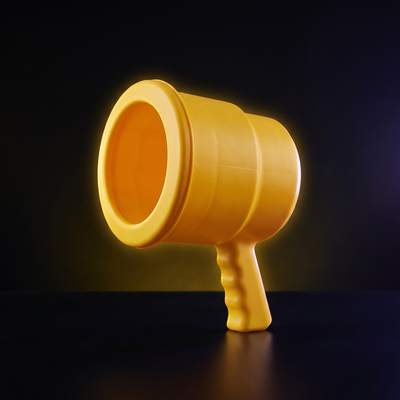
The toys that cause the least trouble in a mixed household share a shape: large, one piece, nothing to lose, nothing to chew open. Soft balls, large-format bricks, scooters, board games with big components, and toys that fire air rather than objects all fall into that group. The AirZooka is one example of the last category, in that it shoots a ring of moving air and has no ammunition or small parts to leave behind. It should never be aimed at an animal, and that is worth saying plainly to children before they use it.
Beyond that, the honest answer is that no toy is safe on its own. A large solid toy left in the path of a dog on the stairs is a hazard of a different kind. Sorting the toy box is worth an hour; the daily floor sweep is what actually keeps it working.
If it fits in a cardboard tube, it does not live on the floor.