Brain breaks that fit the time you actually have
Somewhere around the twenty-minute mark a class starts to go. Pencils get tapped, someone needs the bathroom, and the three children who were with you at the start are now the only ones. A brain break is not a reward and not a treat; it is a way of ending the drift on purpose rather than losing the next ten minutes to it. The list below is sorted the way teachers actually choose: by the minutes you can spare and by whether anyone can safely stand up.
Quick answer
A brain break is a short pause that shifts students out of sustained concentration and into movement, breath, or a different kind of thinking. The useful way to choose one is by the two constraints you actually have: how many minutes you can spare, and whether there is room for children to stand up and move. Thirty-second breaks reset a wobble, two-minute breaks reset a lesson, and five-minute breaks reset an afternoon.
Key takeaways
- Pick a break by time available and floor space, not by novelty.
- Thirty-second breaks are for catching a class before it drifts, not after.
- Seated breaks need a clear physical end signal or they run long.
- Give the same break the same name every time so setup takes seconds.
- Have two or three you can run with no materials at all.
Choose by constraint, not by theme
Most brain break lists are organised by category: movement, mindfulness, music, games. That is a nice way to write a list and a bad way to use one. When you need a break, you need it in the next fifteen seconds, and the only two things you know are how much time is left before the next thing and whether the room can hold twenty-eight standing children. Sorting by those two facts means you can pick without reading.
It also helps to keep the total number small. Five breaks that a class knows cold will beat thirty that need explaining every time. Name them, use the same name every time, and let the class learn the routine so the setup cost drops to nothing.
| Time available | What it fixes | Space needed |
|---|---|---|
| 30 seconds | A wobble mid-task; restlessness before it spreads | None, at desks |
| 2 minutes | The gap between two lessons; a class that has stopped listening | Desks or standing beside them |
| 5 minutes | A whole-class energy crash, usually after lunch | Cleared floor or corridor |
Matching a break to the gap in front of you
Thirty-second breaks, students stay at desks
These are the ones that matter most because they are the ones you will use every day. Thirty seconds is short enough that you can spend it without feeling you have lost the lesson, which means you will actually do it rather than pushing on through.
- Chair press: hands on the seat either side, press down, lift slightly, hold for a slow count of five. Repeat three times.
- Ten and ten: ten silent shoulder rolls backwards, ten forwards. No talking is the whole rule.
- Palm to palm: hands together at chest height, push hard for five seconds, release, shake out. Twice.
- Look far: everyone finds something outside the window or at the far wall and stares at it while you count to fifteen. Useful after screen work.
- Backwards from twenty: whole class counts down together, halving the volume every five numbers so you end on a whisper. The whisper is the point.
Two-minute breaks, students stay at desks
Two minutes is enough to change what a class is thinking about, which is what you want between two pieces of work that ask for different things. These are quiet enough for a shared wall.
- Odd one out: put four words on the board and ask each table to argue for a different one. Any answer counts if the reason holds.
- Silent mirror: partners face each other, one leads a slow movement, the other copies. Swap after a minute. Talking ends the round.
- Category chain: name a category, go round the room, each student adds one item without repeating. Nobody is out.
- Draw the word: read out a word and give ninety seconds to draw it on a whiteboard. Show all at once on a count of three.
- Two truths about the weekend: partners share, then one person reports their partner's, not their own.
Two-minute breaks, students out of seats
Standing beside a desk needs almost no space and changes far more than it looks like it should. These work in rooms where a full circle is impossible.
- Four corners: label the corners agree, disagree, not sure, depends. Read a low-stakes statement and let students move.
- Stand and stretch ladder: reach for the ceiling, then the floor, then twist each way. Slow, on your count.
- Beat the teacher: you clap a rhythm, class repeats it. Get faster until they lose it, then stop.
- Line up by: birthdays, height, or first letter of a middle name, without talking. Gesture only.
- Move and freeze: walk between the desks on your count and freeze on the word. Two rounds is plenty.
Five-minute breaks that need floor space
Five minutes is a real decision and you will only make it a few times a week, usually straight after lunch or on the Friday afternoon that has clearly ended early. Clear a space first and set the boundary out loud before anyone stands up.
- Sleeping lions with a twist: everyone lies still while two students walk between them looking for movement. Quiet by design.
- Relay of nonsense: teams pass an object down a line using elbows only. Speed is not the point; the failure is.
- Follow the leader in slow motion: one student leads, everyone moves at half speed. Slow movement is harder and quieter than fast.
- Class knot: small groups join hands across a circle and untangle without letting go.
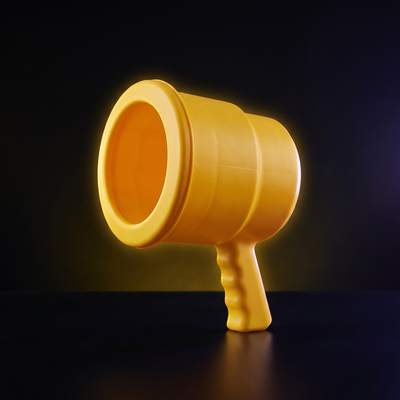
- Something airborne: a paper plane throw, a balloon kept off the floor, or an air vortex blaster like the AirZooka fired across the room at a paper target. Anything that gives the class one thing to watch travelling through the air will hold twenty-eight sets of eyes for the full five minutes.
Building a break routine that survives a real week
The breaks that get used are the ones that need nothing. If a break needs a device, a login, or a resource from the cupboard, it will be skipped on the day you most need it. Keep at least three that require only your voice.
- Pick five breaks total, not twenty. Two seated, two standing, one longer.
- Give each one a name and write the names on a card by the board.
- Teach the ending signal separately, before you ever teach a break.
- Run the same one at the same point in the day for two weeks so it becomes routine.
- Drop anything the class does not settle from within thirty seconds. It is not the right break for that group.
When a brain break is the wrong answer
Sometimes a class is not restless but stuck, and adding movement to a room full of confused children just moves the confusion around. If the off-task behaviour started when the work got harder, the fix is a rephrased instruction or a worked example, not a stretch. If it started around the twenty-minute mark regardless of the task, a break is right. Watching which of those it is takes a few seconds and saves the next twenty minutes.
A break you stop cleanly is worth three you have to shout the end of.